



Why Thoughtful Lounge Furniture in Airport Terminals Can Significantly Reduce Travel Stress
Updated: Feb 18
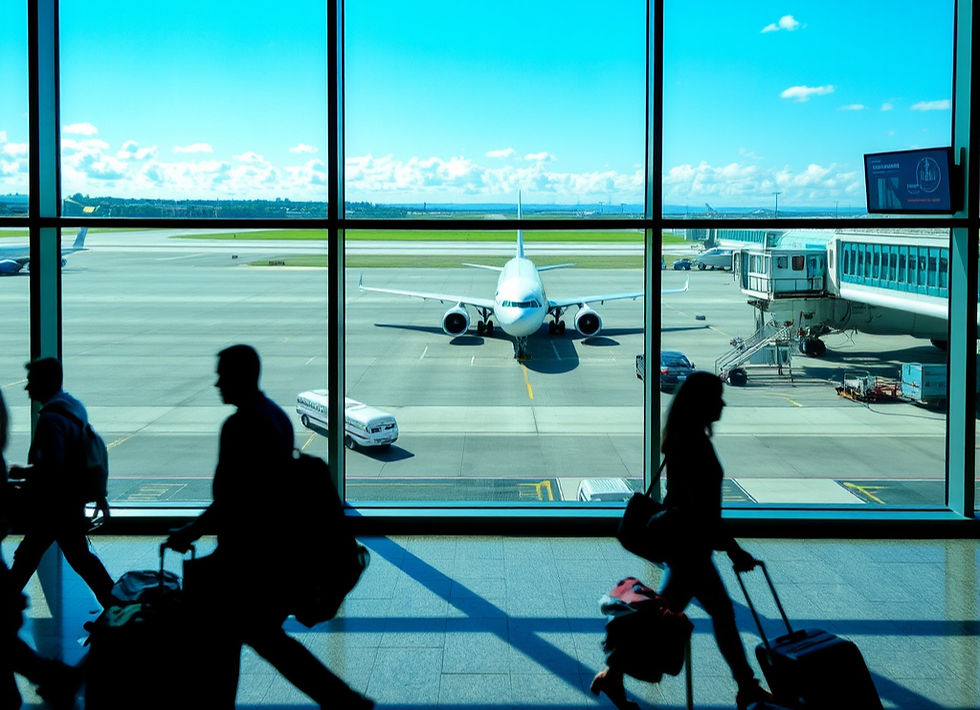
Travel can be stressful, from delays and cancellations to long layovers or traveling with kids. While airline lounges are often seen as stress-relief zones, the design of the public terminal matters just as much. Thoughtfully placed, comfortable upholstered seating throughout terminals can reduce stress, helping travelers feel calmer, more in control, and more at ease.
The Psychology of Comfort & Control in Terminals
Sense of Ownership and Territory
In terminals dominated by rigid, uniform seating, travelers often feel anonymous. Soft seating areas such as couches, lounge chairs, and clusters allow people to claim a space, restoring a sense of control in an otherwise chaotic environment.
Sensory Regulation and Reduced Overload
Airports are sensory-intensive environments, with announcements, crowds, baggage wheels, and lighting changes. Comfort-focused seating and spatial zoning help dampen sensory overload, which research shows can reduce mental fatigue and anxiety.
Well-Being Through Design
Studies on human-centered transportation spaces show that integrating comfortable seating and calming design elements improves well-being and lowers cognitive load. Thoughtful terminal furniture is a simple but powerful way to create these benefits.

Common Airport Stressors and How Lounge Furniture Helps
Crowding and Noise
Terminals are busy, crowded, and often noisy. Soft-seating zones provide physical and mental islands where travelers can distance themselves from the hustle, offering a restorative break.
Long Layovers
Without ergonomic seating, layovers can feel interminable. Couches and lounge chairs transform waiting into an opportunity to rest, work, nap, or socialize comfortably.
Traveling with Children
Families face additional chaos in terminals. Seating clusters give parents a base, soft furniture provides forgiving surfaces for kids, and shared spaces encourage informal gathering, helping families manage downtime more calmly.
Delays and Uncertainty
Gate changes or cancellations heighten anxiety. Comfortable seating offers a stable space to monitor updates, plan next steps, and decompress, rather than pacing or crowding the gate area.

Real-World Validation: J.D. Power and Terminal Facilities
Minneapolis–Saint Paul International Airport (MSP) consistently ranks at the top of J.D. Power’s North America Airport Satisfaction Study, driven in part by terminal facilities. J.D. Power defines terminal facilities to include concourses, public seating, gate areas, and overall ambiance. Recent reports note that passenger satisfaction has risen alongside capital improvements focused on terminal experience. This underscores the value travelers place on comfortable, human-centered terminal design.
Evidence from Design and Well-Being Research
Research across public transportation environments shows that improving the built environment through comfortable seating, biophilic elements, and calm layouts leads to reduced cognitive load and improved user well-being. Terminal design can directly influence mood, perception of control, and satisfaction, making seating choices a strategic decision.
Real-Life Scenarios: How Terminal Furniture Makes a Difference
During a Delay or Cancellation
Rather than being confined to cramped gate benches, travelers can sink into plush armchairs or couches, lowering arousal and creating space to reframe, plan, or rest.
Long Layovers
Comfortable lounge seating allows travelers to recharge devices, work on a laptop, or take a short nap, turning downtime into a productive or restorative pause.
Traveling with Kids
Families can spread out in soft seating zones. Kids can relax or play while parents supervise from nearby seating, fostering a calmer environment than standard gate benches.
Practical Tips for Airport Designers and Planners
Invest in Soft Seating Zones – Prioritize couches, armchairs, and lounge clusters instead of rows of identical chairs.
Zoning Matters – Create quiet areas for rest and conversational zones for socializing.
Power and Connectivity Integration – Include accessible outlets and Wi-Fi for working or recharging devices.
Biophilic and Calm Design Touches – Use natural elements, soothing lighting, and warm, tactile materials.
Family-Friendly Seating – Incorporate soft, durable furniture and spaces near play or rest areas.
Conclusion
Airports are more than transit hubs, they shape how people feel while traveling. Investing in comfortable, lounge-style seating throughout terminals is a strategic way to reduce stress, improve satisfaction, and create a more human-centered travel experience. Thoughtful terminal design benefits both travelers and airports, turning waiting into a restorative, productive, or simply calmer experience.

---
Sources / References
Environmental psychology studies on comfort and sensory regulation:
J.D. Power North America Airport Satisfaction Study 2025:
MSP Airport blog on rankings:
Metro Airports news release:
J.D. Power definition of terminal facilities:
Aviation Pros report on terminal improvements and passenger satisfaction:


Comments